

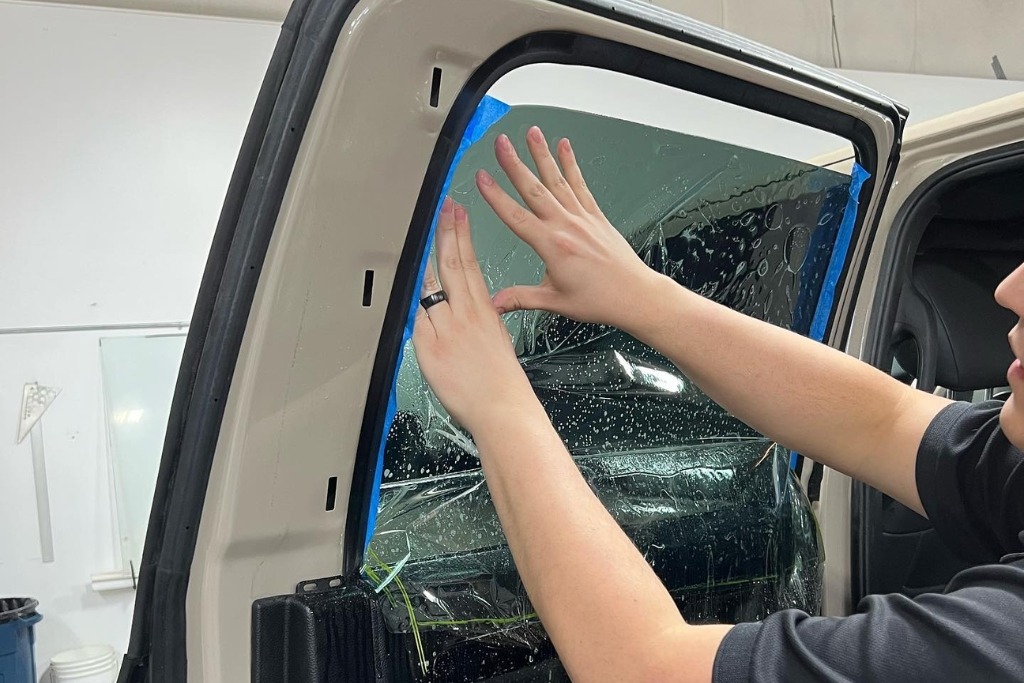
Window tint does not fail all at once. It fails a little at a time, through one Treasure Valley summer after another, until one morning you back out of the driveway and notice the rear glass has gone the color of a grape soda. By then the film has usually been underperforming for a year or two. At Auto Shades Idaho, most of the tint we strip off vehicles in Caldwell is not damaged from an accident. It simply reached the end of its service life and nobody caught the early signs.
This guide covers what actually wears out inside a window film, the specific symptoms worth acting on, and what you gain by replacing older film with current technology instead of living with it.
Why Window Tint Wears Out Faster in Southwest Idaho
Film ages everywhere. It ages faster here for reasons that stack on top of each other.
Caldwell sits at roughly 2,400 feet, which means measurably more ultraviolet exposure than a coastal city at sea level. Add long, cloudless summer stretches, low humidity, and the kind of daily temperature swing where a car can sit at 130 degrees Fahrenheit inside at 4 p.m. and drop toward freezing by 6 a.m. in October. That swing matters more than most drivers realize. Glass expands and contracts, adhesive expands and contracts, and they do not do it at exactly the same rate. Thousands of cycles later, the bond starts giving up.
What Is Actually Breaking Down
A window film is not one material. It is a laminate, and the layers fail in a predictable order.
- The scratch-resistant coating sits on the inside surface. It wears first, usually from seat belts, dog claws, ice scrapers used on the wrong side of the glass, and rolling windows down with grit on the seal.
- The dye or particle layer gives the film its shade and does part of the heat work. In older dyed films, UV exposure destroys the dye and you get the classic purple shift.
- The adhesive is the layer that decides how the film dies. Once UV and heat degrade it, you get bubbles, edge lift, and a hazy separation between film and glass.
This is why a film cannot really be topped up or refreshed. When the shade goes, the adhesive is usually not far behind.
Seven Signs It Is Time to Replace Your Tint
1. Purple, bronze, or copper color shift
Unmistakable, and specific to older dyed film. Modern carbon and ceramic films do not contain the organic dyes that break down this way, so a purple window is a reliable sign you are looking at outdated technology, not just an outdated install.
2. Bubbles or blisters
Small water pockets in the first week or two after a new install are normal and disappear as the film cures. Bubbles that show up years later are adhesive failure. They spread, and they cannot be pressed out.
3. Peeling or lifted edges
Corners and the top edge of a door glass are the usual starting points, because that is where the film meets the most handling. Once an edge lifts, dirt gets under it and the lift accelerates.
4. Milky or hazy glass
Often most visible at night in oncoming headlights. Haze means the adhesive layer has begun to cloud or delaminate. It hurts night visibility, which is a safety problem, not a cosmetic one.
5. The cabin still gets punishing in July
This is the sign drivers ignore most. A dyed film that looks acceptable can be doing very little for heat, because darkness and heat rejection are not the same thing. If your tint looks fine but your steering wheel is untouchable at 3 p.m., the film is failing at its main job. Our breakdown of how much cooler window tint can actually make your car puts real numbers to that difference.
6. Deep scratches or scuffing
Surface scratches in the film cannot be polished out the way they sometimes can on glass. The scratch coat is thin, and once it is through, the mark is permanent.
7. Cracking or crazing near the rear defroster
The defroster grid runs hot and cycles often, so the film directly over those lines is the most heat-stressed area on the vehicle. Fine cracks radiating along the lines mean the film is brittle and will not survive removal cleanly. That is worth knowing before someone attacks it with a razor.
What You Gain by Upgrading, Not Just Replacing
Replacing like for like is a missed opportunity. Film technology has changed substantially, and the gap between the cheapest and the best options is much wider in performance than it is in price.
| Film type | Heat rejection | Fade resistance | Signal interference | Typical service life |
| Dyed | Low. Mostly shade, little infrared control | Poor. Prone to purpling | None | Roughly 3 to 5 years |
| Metallized | Moderate. Reflects heat | Good | Possible. Can affect GPS, cell, tire sensors, keyless entry | Roughly 5 to 10 years |
| Carbon | Good. Solid infrared rejection | Very good. No dye to fade | None | 10 years or more |
| Ceramic | Highest. Strong infrared rejection at lighter shades | Excellent | None | 10 years or more, often lifetime warranted |
Service life ranges above are general industry expectations, not guarantees. Actual life depends on the specific product, install quality, and how hard the sun hits your parking situation.
The single most useful thing to understand: ceramic film separates darkness from heat control. A driver who wants a nearly clear front glass can still get meaningful heat and infrared rejection, which was not really possible with older film. We go deeper on that in our guide to ceramic window tint benefits for Idaho drivers.
Quality film also blocks up to 99 percent of ultraviolet radiation, which protects your dash, seats, and door panels from the cracking and fading that make an interior look ten years older than the odometer suggests. Our article on how window tint protects against UV damage in Idaho explains what that exposure does over time.
How Professional Tint Replacement Works
- Inspection. We check the condition of the existing film, the state of the rear defroster grid, and any prior damage to glass or trim. This is where the quote gets accurate.
- Removal. Heat and steam soften the adhesive so the film releases in sheets rather than shredding. Old, brittle film takes longer, and film over a defroster takes the most patience.
- Adhesive cleanup. Removing film is only half the work. Residue has to come off completely, because new film will telegraph every speck left behind.
- Glass prep. Full clean, edge to edge, including the areas hidden by the door seal.
- Cutting and installation. Film is cut to the vehicle’s pattern, then applied and squeegeed to remove the mounting solution.
- Cure period. Expect several days of slight haze or small water pockets, longer in cold weather. Leave the windows up during this window.
What Replacement Costs
Replacement usually costs more than a first-time install on bare glass, because removal is labor. How much more depends on a few things:
- Number of windows, and whether the rear glass is involved
- Age and brittleness of the existing film
- Whether a previous installer used a low-grade adhesive that fights removal
- Presence of a rear defroster grid, which slows the work considerably
- The film you choose for the replacement
For a fuller picture of pricing tiers and what drives them, see our breakdown of car window tint cost in Caldwell, ID.
Why Fall Is the Smartest Time to Replace Tint
Most people book tint work in June, when the heat is already unbearable. October is quietly the better month.
Film cures faster in mild, dry conditions than in cold or damp ones, so early fall gives you better curing weather than December. Shops are less booked than mid-summer. And film damaged by a hard summer is at its most brittle right now, which means removal is easier before another freeze-thaw cycle makes it worse. You also get UV and interior protection through winter, when low sun angles put glare directly in your eyes on the drive home.
Do Not Inherit Someone Else’s Illegal Tint
If you bought the vehicle used, the film on it may not be compliant. Idaho sets a minimum visible light transmission for front side windows, allows darker film on the glass behind the driver, and limits how reflective film can be. Tint statutes get revised, so confirm the current limits with your installer before choosing a shade rather than relying on what a previous owner did. A reputable shop will tell you plainly what is legal and what is not, and will not talk you into film that earns you a fix-it ticket.
Frequently Asked Questions
How long does window tint last?
It depends almost entirely on the type. Older dyed film often shows problems in three to five years in Idaho sun. Quality carbon and ceramic films commonly run ten years or more, and many carry lifetime warranties against bubbling and color change.
Can old tint be repaired instead of replaced?
Rarely, and not in a way that lasts. A single damaged window can be redone individually, but bubbling, purpling, and haze are adhesive and dye failures across the whole sheet. Patching part of a window leaves a visible seam and the surrounding film keeps degrading.
Will removing old tint damage my rear defroster?
Not when it is done with heat and steam by someone who has done it before. Damage happens when film is scraped off dry with a blade, which lifts the thin defroster lines off the glass. Those lines cannot be reliably repaired once broken.
Can I replace just the front windows?
You can, and drivers sometimes do when only the front film has failed. Be aware that a new film next to an older one will show a color and clarity difference, especially in daylight from outside.
How long should I wait before rolling my windows down?
Give it several days as a minimum, and longer in cool weather. Your installer will give you a specific number based on the film and the forecast. Rolling a window down early can pull the film’s edge before the adhesive has set.
Ready for Tint That Actually Performs?
Old film that has gone purple, hazy, or bubbled is not just a looks problem. It is doing less for heat, less for glare, and less for your interior every year it stays on the glass. Replacing it with modern ceramic or carbon film gives you better performance at a lighter shade, a clean finish, and a warranty that means something.
Auto Shades Idaho serves Caldwell, Nampa, Boise, Eagle, Star, and the surrounding Treasure Valley. Take a look at our automotive window tinting services, then contact our team for an honest assessment of what your glass needs. We will tell you if your existing film has life left in it, because a customer who trusts our answer comes back.